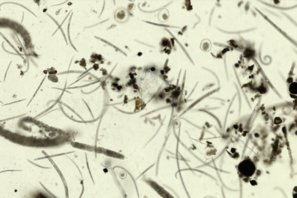
Parasitic nematodes cause $125 billion in agricultural damage around the world each year, but University of Florida scientists hope to alleviate some of that destruction.
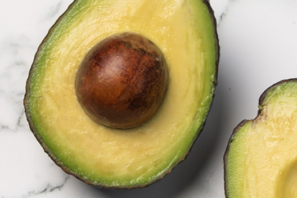
If you have ever brought home seemingly fresh produce from the grocery store only to find it wilted and moldering a few days later, Tie Liu feels your pain. “Everybody has this problem: Which of these vegetables or fruits should I use first? Guess wrong, and you end up throwing out the food,” said Liu, a postharvest researcher and assistant professor in the UF/IFAS horticultural sciences department.
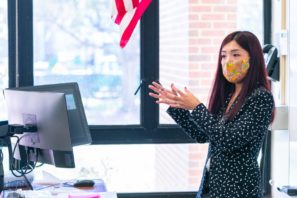
Building upon her background in corporate communication research, Public Relations Associate Professor Rita Men went into high gear during the pandemic to study effective communications from CEOs as well as chatbots used for social listening.
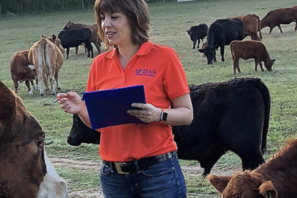
For a century, researchers have tracked genetic traits to find out which cattle produce more and better milk and meat. Now, two University of Florida scientists will use artificial intelligence to analyze millions of bits of genetic data to try to keep cattle cooler and thus, more productive.
Artificial intelligence and computer science researchers say getting machines to do the right thing has turned out to be relatively easy. We program Roombas to vacuum our homes, but don’t expect them to brew our coffee. We program robotic arms to sort parts in factories, but not to decide which colors to paint cars. We program doorbells to tell us who is at the door, but not to let them in. Most of our machines do one thing and do it well, usually in error-free fashion. They get the task right.