Career experts at the University of Florida Career Connections Center are partnering with companies to identify how they’re using artificial intelligence, or AI, to ensure students have the skills they need to land a job of their choice after they graduate.
UF students from any major can now pursue a certificate that teaches them the basics of artificial intelligence, a field likely to uniquely position students for the future workforce.
Diego Alvarado believes it’s vital that society understands the role artificial intelligence plays in everything we do.
“Everybody is calling it the new electricity,” said Alvarado, an instructional assistant professor at the Herbert Wertheim College of Engineering at the University of Florida. “It’s under the hood of almost everything. We need to be able to understand it.”
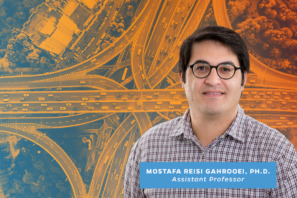
Mostafa Reisi Gahrooei, Ph.D., has received funding from theNSF for his research in developing a proactive, data-driven framework for monitoring road transportation networks during extreme events.
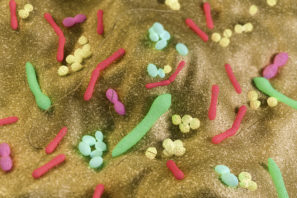
To solve the elusive medical mystery of why many adults have both high blood pressure and depression, University of Florida Health researchers took a long, in-depth look at one suspected culprit: gut bacteria.
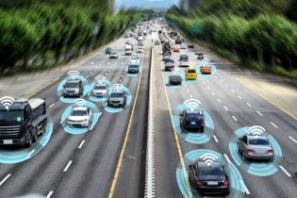
Connected and autonomous vehicle (CAV) technologies present great opportunities for reducing traffic congestion through advanced sensors, communication, and portable computing devices
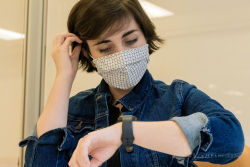
Many Americans are simply touching their faces too often during the novel coronavirus pandemic, public health officials have observed, potentially increasing their exposure to the pathogen.
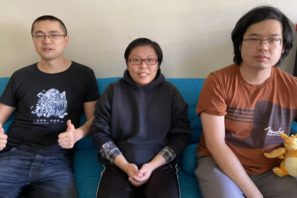
Wei Zhai and his team received a $10,000 year-long Microsoft AI for Earth grant, offering him access to imperative computational resources such as Azure Machine Learning, Virtual Machine and App Service and Storage.
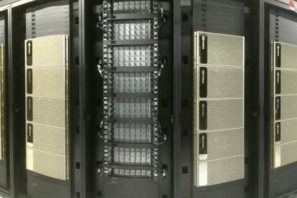
The University of Florida’s HiPerGator AI supercomputer has been named the one of the most powerful worldwide, according to rankings just released by TOP500, the most referenced global ranking of high-performance computing systems.