
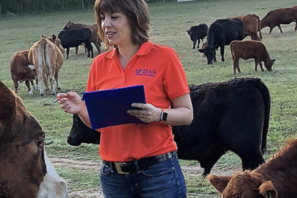
For a century, researchers have tracked genetic traits to find out which cattle produce more and better milk and meat. Now, two University of Florida scientists will use artificial intelligence to analyze millions of bits of genetic data to try to keep cattle cooler and thus, more productive.
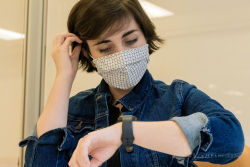
Many Americans are simply touching their faces too often during the novel coronavirus pandemic, public health officials have observed, potentially increasing their exposure to the pathogen.
At the Warren B. Nelms Institute for the Connected World, My T. Thai is developing software to explain how bias can creep into algorithms.
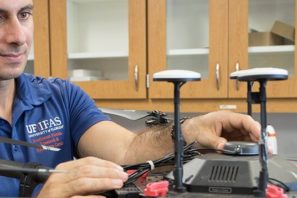
UF/IFAS scientists are using AI to help solve chronic diseases, working with UF Health researchers. They’re also using drones to find diseased plants in large fields.
Since its foundation in 1960, the International Society of Nephrology has encouraged global networking, building partnerships within the nephrology community and organizations with aligned missions to combat non-communicable diseases.
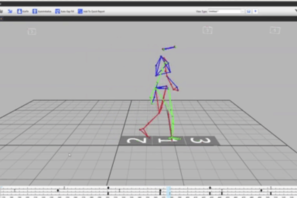
This summer, five graduate students in the University of Florida Department of Applied Physiology and Kinesiology (APK), join 10 graduate students in biomedical engineering, neuroscience and clinical psychology to learn about the applications and fundamentals of artificial intelligence (AI), specifically around machine learning.
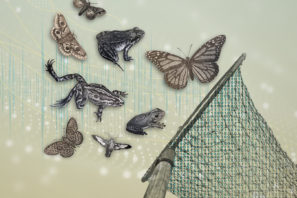
The frontiers remaining in the natural world today are not in the thickest jungles, deepest oceans and highest mountains. For...
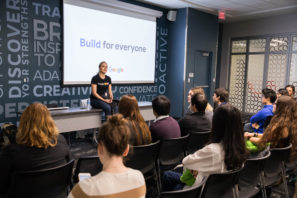
Career experts at the University of Florida Career Connections Center are partnering with companies to identify how they’re using artificial intelligence, or AI, to ensure students have the skills they need to land a job of their choice after they graduate.
Juan E. Gilbert has created a ticketing system to help voters maintain social distancing while exercising their right to vote.
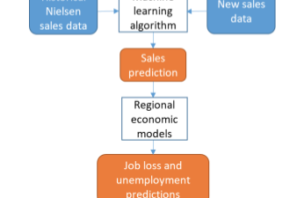
Researchers at UF are using data from the past to establish a method for predicting the near-term economic impacts of the pandemic.
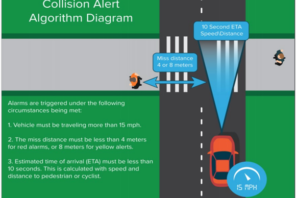
Florida Department of Transportation ranks safety as a top priority for the state, and it is listed as one of FDOT’s Vital Few focus areas. Despite the vision of having fatality-free roadways, crashes are still a reality today.
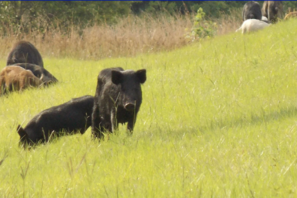
Feral pigs cost the agriculture industry at least $1.5 billion in damage, disease and control costs around the United States annually, running rampant on large swaths of grazing lands.